EWERS Mechatronics Engineers – Among Estonia’s Best for Over a Decade
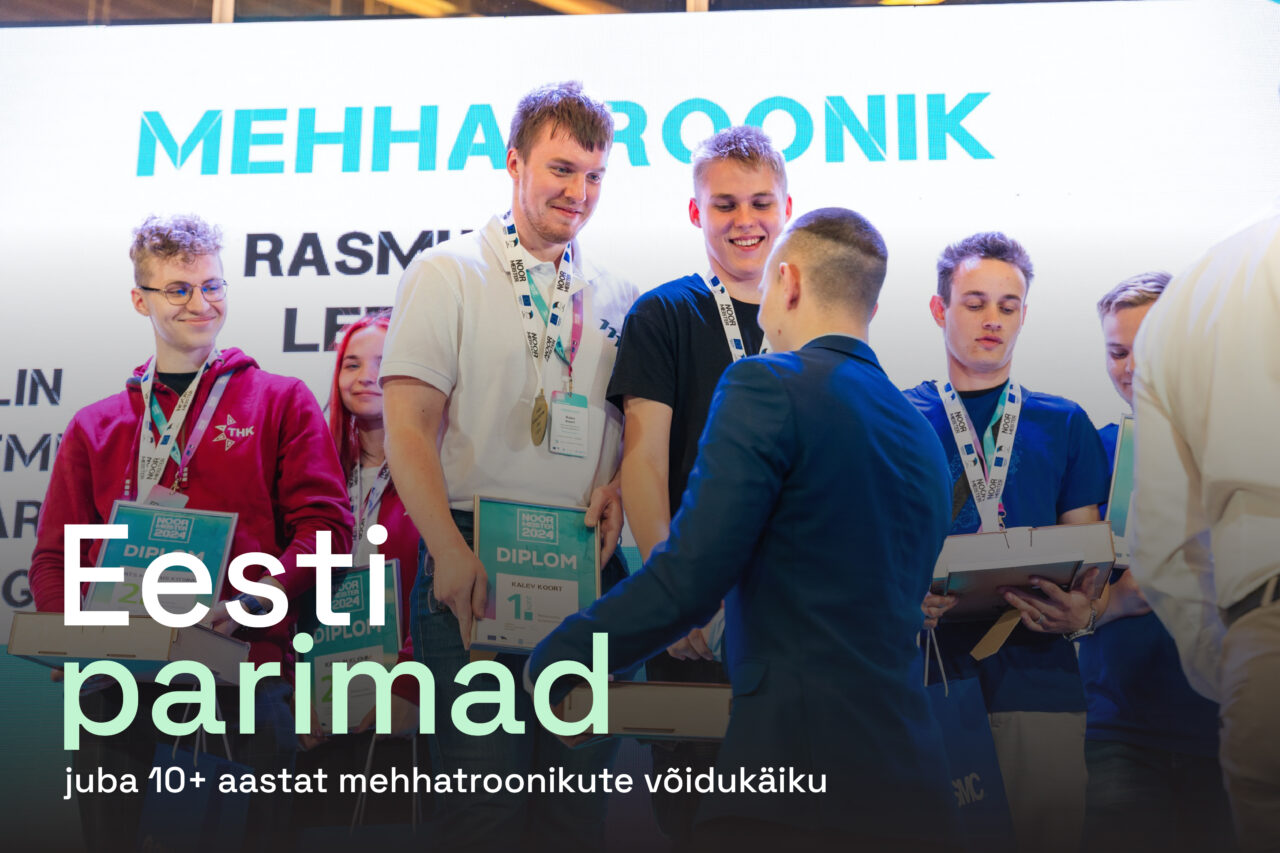
We can confidently say that EWERS produces Estonia’s best mechatronics students—and has done so for more than ten years in a row. This is not based merely on our own pride and faith in our students, but is confirmed every spring when our mechatronics students are awarded gold medals recognizing them as the best in the country.
But what is mechatronics? Simply put, this field combines robotics, automation, and modern technology into a cohesive whole. It is a rapidly evolving field, and specialists in this area are in high demand across a wide range of industries. Mechatronics engineers design, develop, and maintain the systems that shape our everyday lives—from production lines to smart devices.
At the same time, mechatronics is not an easy field of study. Success comes to those who are willing to work hard, experiment, and keep learning. Both dedication and a natural curiosity are essential. Although no one is born a mechatronics engineer, successful students often share similar backgrounds and interests from an early age.
EWERS alumnus Josten Laanemets recalls: “At home, I always found something to fix or take apart and examine, and I was also pretty skilled with computers.”
Rasmus Lepik adds: “From a very young age, I was interested in all kinds of technology, but especially anything related to electricity.”
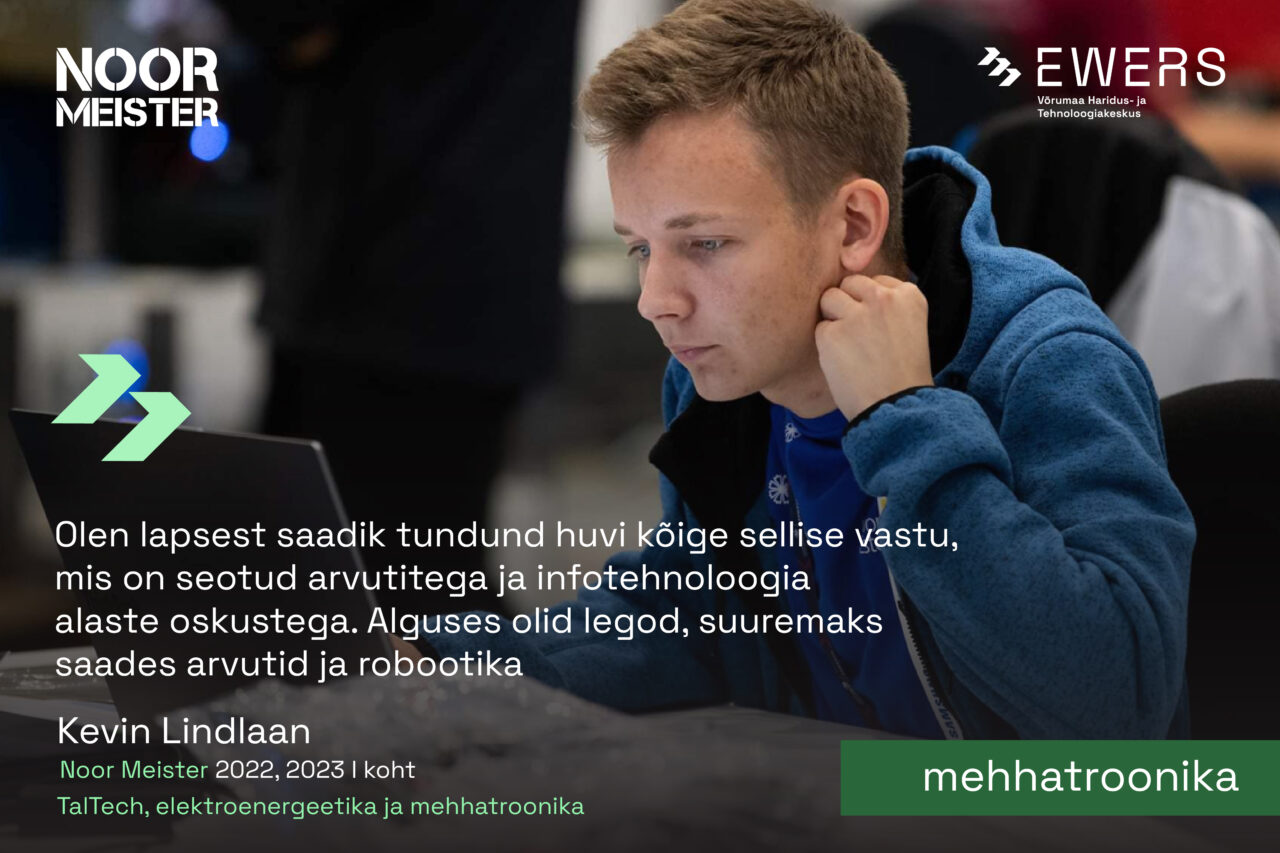
Kevin Lindlaan describes his journey this way: “At first, it was Legos; as I got older, it was computers and robotics.”
Mechatronics is particularly well-suited for those with strong logical thinking skills, technical aptitude, and an interest in how systems work. Students who enjoy a hands-on approach and are willing to seek solutions independently will do well in this program.
Teachers also play an important role. Viktor Dremljuga, a vocational teacher of mechatronics, has been awarded both the title of Vocational Teacher of the Year and a county-level medal of honor. His teaching style is demanding but effective:
“I set a goal for my students to find the answers themselves—to understand problems in such a way that they can explain both their nature and their solutions. At every moment, the student must know why it is this way and not another,” she says, describing her approach.
Alumnus Josten Laanemets recalls his teacher with gratitude: “Thanks to his strict but excellent guidance, my knowledge grew the most.”
What happens after graduating with a degree in mechatronics? There are many possibilities. Many continue their studies at universities. For example, Kevin Lindlaan is studying at Tallinn University of Technology. Josten Laanemets continued his studies at Mainor Business School and Cleveron Academy, focusing on robotics software development and the development of autonomous robots.
Today, Josten works as a software developer for automation systems, focusing on industrial automation, programming, and backend solutions. The knowledge he gained while studying mechatronics has given him a strong advantage—the ability to see and understand systems as a whole.
EWERS’ mechatronics program doesn’t just provide knowledge—it shapes the leaders of tomorrow.
In the 2026/2027 academic year, middle school graduates will be able to acquire broad-based knowledge in mechatronics through the industrial digital technology program. During the program, students can choose between three tracks: mechatronics, robotics, and industrial digital technology.
For those who have completed secondary education, EWERS offers a Level 5 program in mechatronics.