Metalworking Technician-Technologist (Level 5 Vocational Training, Continuing Education)
While machine operators and welders start up the machines, the production engineer is the “brain of production”—the person who plans and determines exactly how products are made. This role combines that of a specialist and a team leader, capable of solving complex technical problems and ensuring that modern factories operate efficiently, safely, and in a resource-efficient manner. This curriculum is designed for individuals who already have some experience and wish to take their career to a new, leadership level.
Duration of Study: The program to become a specialist is worth 60 ECTS credits (on average, 1 year). Your previous work experience in the metalworking field can often be credited toward the internship (15 ECTS credits).
*This field of study can also be pursued through on-the-job training.
What exactly do you study and do?
- Production Planning and Technology: You will learn to design and evaluate technological processes used in the machinery and metalworking industries. You will understand the main processes involved in the forming of sheet metal (e.g., punching and bending) and evaluate the cost-effectiveness and technological feasibility of manufacturing products.
- CAD/CAM Design: You will learn to use professional computer software (AutoCAD, SolidWorks, MasterCam) to create working drawings and manufacturing specifications, and to generate NC code for machining parts.
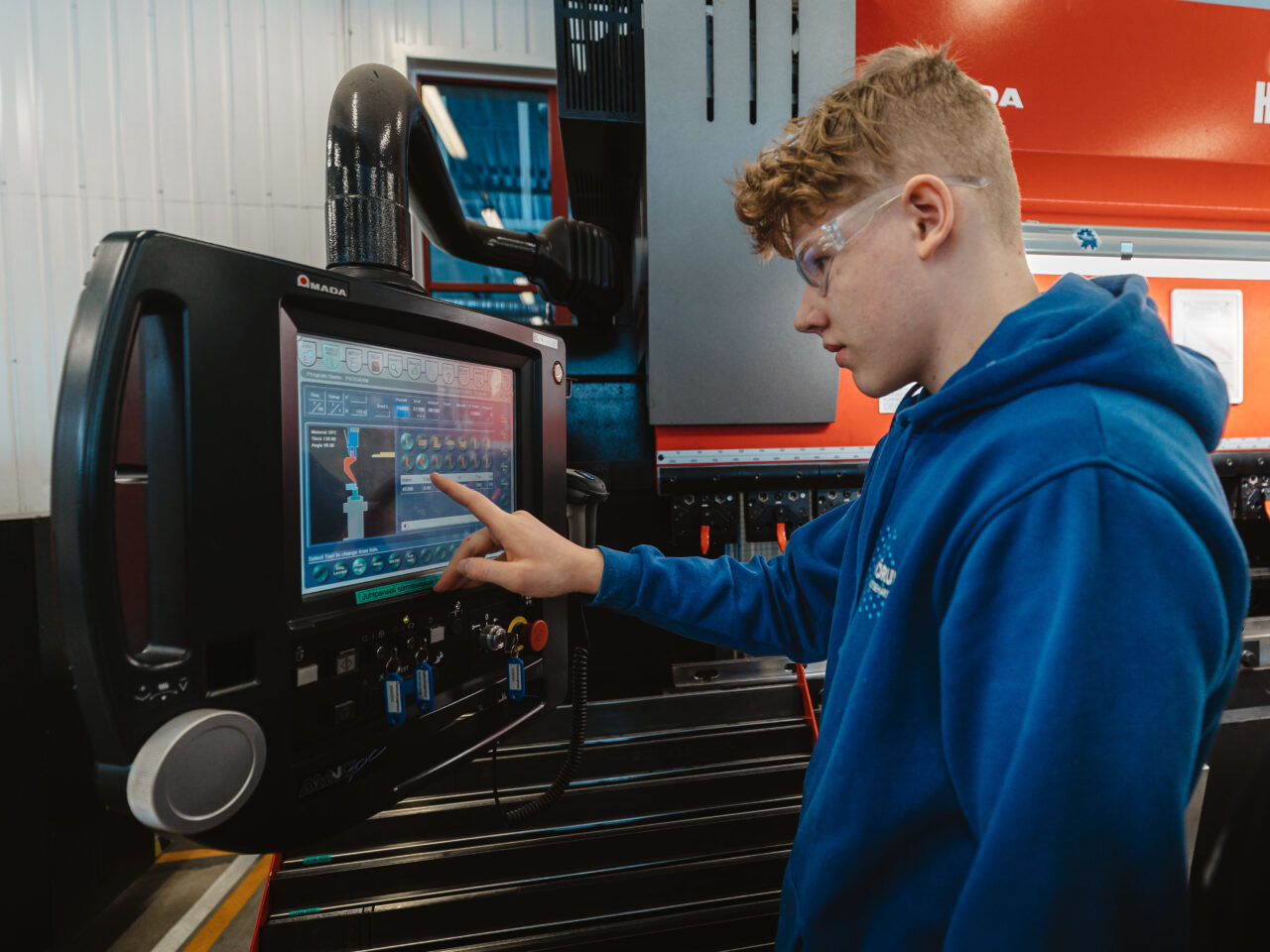
- Knowledge and Use of Machinery: You are able to select the appropriate machine tools and cutting tools, and you have a thorough understanding of the construction, purpose, and technical capabilities of machinery (e.g., APJ metal-cutting machines and bending machines).
- Management and Work Organization: You will gain an understanding of the fundamentals of a company’s work organization: you will learn about employment relationships as governed by law, how to draft job descriptions, employment contracts, and work schedules, and how to calculate payroll systems.
- Accuracy and Quality: You select and use appropriate measurement techniques, are able to measure parts in accordance with strict tolerance limits, and apply these skills within the company’s quality control system.
Course Options
There are no specific specializations in this program; the entire focus is on mastering the core skills of a technician-technologist. However, you have the opportunity to choose up to 12 EKAP worth of various elective courses (such as entrepreneurship, professional Finnish, advanced CAD/CAM technology, or metal casting) to broaden your knowledge.
Is this field right for you?
- This program is a continuing education program, which means that to begin your studies, you must have completed secondary education and already hold a Level 4 or 5 vocational qualification in the field of metalworking (or possess equivalent skills and work experience).
- This position is right for you if you are interested in production planning and the natural sciences, want to take on greater responsibility within a team, and have the logical thinking skills needed to solve technical problems.
- The program is very flexible: it offers part-time study (semester-based) or work-based learning (apprenticeship), which allows you to study and work at the same time.
Where to next?
The program concludes with a Level 5 vocational exam or the school’s specialized final exam. Upon graduation, you will be a highly sought-after technician-technologist who can take a position as a production planner, process engineer, quality manager, or mid-level manager at modern metalworking companies.